Organization Alignment

Your business success depends on how well you and your employees interact to ensure that everyone in all departments get what they need, when they need it. This fact is not a problem to solve, rather it is an honor and a privilege to live by.

Organization Alignment is built on this.

Once you think other people, departments, or functions are a problem, then you miss the point. Align, support, take pride in how you work together, and unify your interactions with the customer. Then you will reach business results never before imagined!

If your organization’s behavior is the opposite from above, then likely you’re struggling to complete major projects, initiatives, or goals on time, with quality, or within budget.

My mission is to help organizations get aligned and focused on what is truly important to reach their objectives, then provide them with the implementation tools for achievement. This is not some slogan or a new program, neither of those things work, rather it is about highlighting dynamics that currently exist within your workplace, and giving you the tools to overcome them. In fact, the main tool that you need to succeed is the people already inside your organization. This book shows you how to align them to your strategic direction, and involve them to get there.

In the coming chapters I will show you how to organize and align your workplace to consistently achieve a high level of business success. If there is a secret, it’s that “There is no one right tool external to your workplace.”

The answer lies within. The journey is to learn how to tap into the collective wisdom of your employees in order to create a thriving, productive workplace!

From Chris Crosby’s upcoming book, “Organization Alignment.”

Posted in Alignment | Tagged , , , , , , , , , , , , , , | Leave a comment

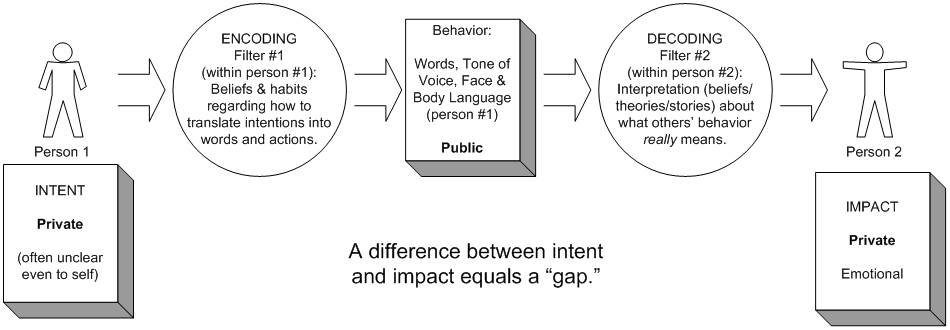
The Interpersonal Gap by John Wallen

Interpersonal Gap

Click on the image to enlarge!

Posted in Emotional Intelligence | Tagged , | Leave a comment

Engagement for the Bottom Line: Do you have a strategy to engage all layers of your organization?

Research consistently draws a direct correlation between employee engagement and business results. Indeed, the top 25% of companies in a recent study of workplace engagement (involving 25 million employees in 195 countries) had significantly better:

  • Productivity
  • Customer Ratings
  • Turnover
  • Absenteeism
  • Safety Performance

…than the bottom 25%. Furthermore, the most engaged organizations in the Gallup study enjoyed 147% higher earnings per share than the competition! Yet, despite these benefits which go far beyond the bottom-line, only 13% of the organizations in Gallup’s latest study made the grade in terms of having an engaged workforce.

Our own research, conducted in the late 1970s , came to similar conclusions. Want to improve safety, absenteeism, and other key metrics? Improve engagement.

How? Most research points in the same direction. As the American Manufacturing Association global study in 2007 put it, “The most important relationship within any organization is the one between the employee and his or her immediate supervisor.” If the supervisor knows how to engage the employee’s heart and mind, then the majority will willingly follow, and the results will show it. If the opposite is true, it is predictable that performance will suffer.

Components of an effective engagement strategy:

  • Develop both Technical and Interpersonal Skills
  • Solve Mission Critical Issues by Involving Employees with Hands-On Knowledge
  • Empower Employees to Continuously Improve their day-to-day Tasks

Of course, no supervisor and their direct reports are working in a vacuum. Top leadership can and should support development of supervisory relationships at all levels, including their own. If the relationships are allowed to be dysfunctional at the top, they will likely be dysfunctional down below.

There are reliable ways to increase engagement, and nobody does it better than Crosby & Associates. Why not start today?

Posted in Culture Change, Emotional Intelligence, Leadership, Organization Development, Safety Culture, Systems Thinking | Tagged | Leave a comment

The Cost of Doing Nothing versus OD Results

Effective Organization Development (OD) is not a needless expense, nor is it a luxury. It is part of a sound strategy to meet or exceed business performance expectations. The cost of staying stuck at or near your current performance is much higher than an investment in OD. To that point, this partial list of our results speaks for itself:

Peach Bottom Atomic Power Station and PECO Nuclear following NRC shutdown (1987-2001): From worst to first by most industry standards, such as SALP and INPO ratings.

Addy Magnesium Plant (1993): “Business Week” in June 1993 edition reported on the plant’s 72% gain in productivity.

Jamalco (1999-2011): Worst on cash curve amongst Alcoa bauxite refineries, 1999, tied for best on cash curve, 2005. Reduction of $38 million in annual operating costs. Only refinery in Jamaica to stay at full production throughout the Great Recession starting in 2008.

Sherwin Alumina (2007-present): Only US bauxite refinery to stay in production throughout the Great Recession starting in 2008.

Grottoes TIPI (2005): Estimated annual savings of between $500,000 to $1 million dollars, despite turnover of Plant Manger and Production Manager soon after TIPI.

AFP Commercial TIPI (2004): 4 1/2 % increase in mature market. 40 to 42 1/2 million increase.

Alcoa AEP Oracle Implementation (2003): Change Management services for first BU to Go-Live.

Alcoa CSI (1999): Successfully completed 6 key R & D projects after no projects being completed the previous two years. Alcoa CSI Oracle Implementation (2002-2006): Received recognition as the benchmark change management plan on the EBS project. During a four year phased implementation, took 18 manufacturing plants live on Oracle. The plants were throughout North America, Mexico, Costa Rica, Spain, Hungary, and Germany. CSI missed no shipments over the four year time span due to the implementations. The previous BU to go live had 50% on time delivery for a year.

CST Industries (2010): Increased spare parts on time shipping from 46% to continuously over 90%. CST Leveraged the increase to capture a greater market share from 9 million in 2010 to 12 million plus in 2011 and expect to reach 15 million in 2012.

The Asian Development Bank (2009): Increased pace of recruitment, reached targets numbers, announced service standards and implemented a system for obtaining client feedback which shows positive results.

Whole System Culture Changes (1999-2002): Created and executed a whole systems culture change in Crawfordsville, Indiana East and North Plant, and Olive Branch, Mississippi and the Technology Building. Components were Leadership development, work team improvement, cross group meetings, key conflicts resolved, goal alignment, leadership transition through group process, and project planning sessions. Each plants achieved records in all key manufacturing indexes.

Bohai Expansion TIPI (2004): Exceeded target of reducing project costs by multi- million dollar figure.

Tempcraft TIPI (2006): Here are the Goal/Actual performance 1st quarter post TIPI –
Revenue $10 million/yr / 64% On-Time Delivery 95% / 84% TRR 0.0 / 0.0 Contribution Margin 40% / 20% Net Hours 5% / 1%

Baden TIPI (1997): $5,500,000 reduction in annual operating costs.

Massena West Smelter TIPI (both in 2001): nearly 3 million in annual operating costs and Massena East Smelter TIPI: $6,300,000.

Warrick TIPI (2001): The Roll Coats Unit of the Finishing Department at was confronted with both an opportunity and a dilemma. The opportunity was to increase production by 2,000,000 pounds per month (a market demand that was being subcontracted outside the plant). The dilemma was that the union management climate was such that there had been no collaborative problem-solving work for 18 months. The three-day process, involving 60 people (40 hourly) was held in late October 2000 with the goal of achieving the 2,000,000 increase per month goal by March 2001. Results: The goal was nearly reached by January, 2001 leading to a predicted $4,000.000 gain for the year plus additional revenue for the plant because of the central role of the Roll Coats Unit. Intangible Results: The union made a decision to participate in cooperative work throughout the rest of the plant.

Posted in Organization Development | Tagged , , , , , , , , | Leave a comment

Putting Your Skin in the Game: The OD Practitioner as Organizer

The following is an excellent description of Crosby & Associates’ approach to Organization Development (OD), written by our founder and reprinted from the OD Practitioner, Vol 27, #2&3, 1995.  It is also a solid guide for sponsors and agents of change:

Some 20 years ago I attended a conference of OD practitioners where our value orientation was measured. About 85% of the attendees scored as “sociocentrics,” that is, as people whose values were organized by process rather than ends values. These participants favored consensual governance as the primary decision-making style. The leaders of the conference chose a directive style compatible with only 5% of the participants, purposely to stimulate the contrast.

I scored with the 5%. Of course I enjoyed the conference since it was conducted in a style compatible with my own. I was intrigued that many sociocentric participants struggled and indeed got quite angry at these “dictatorial” leaders. The sociocentric is likely to lead with the question “who decided,” while the ends-oriented attendee would lead with “what was decided.” Means vs. ends …an old tension. Of course this is not an either/or issue but finding the balance is critical.

The following is a case for the directive side of OD work which I think is under-represented in practice and literature. The OD profession seems to attract people who prefer process behaviors such as data gathering, process observation, or team-building on call rather than as part of a strategic plan. More directive behaviors such as advocacy, strategizing, or active facilitation of problem-solving processes have not been as widespread.

There are many excellent reasons as to why OD has been influenced by sociocentric values. The early 20th century world into which our profession was born was dominated by authoritarian business structures. The industrial scene at the beginning of the 20th century had many characteristics of a serf culture. Our institutions needed a strong sociocentric emphasis. Labor unions advocated for the down-trodden. New under- standings of group dynamics and democratic management processes were a welcome relief. However, such processes still remain functionally unknown to most managers despite abundant popular articles and research supporting democracy in the workplace. So, sociocentric values continually need to be affirmed if there is to be productivity, quality, safety, and high morale. However, the beginning OD practitioner, often
“driven” to an extreme sociocentric stance does so at the expense of the directive, strategic methodologies that are equally important.

About 10 years ago, Ron Short (1985) suggested a paradigm shift for the practice of OD. He contrasted nine categories. I mention only two here:

Our Current Organizing Myth

Change is brought about by the collaborative communications between skilled, well-informed people. The consultant is, therefore, an educator, data collector, feedback mechanism, and facilitator of process.

A Paradigm Shift

Change is a non-rational process. Change is brought about by transformation of the context, not by incremental events. The consultant is an active agent of change; directive, charged with changing structure, and therefore, doesn’t have as a primary concern how well people are communicating.

The implications of this can significantly alter a consultant’s practice. I am grateful to Ron for this leap. It was, indeed, a paradigm shift for me as well as a model for the more directive side of OD. For me, the word organizer has helped make further sense of his paradigm.

What is the Role of the OD Practitioner? The lead questions of the OD practitioner must, of necessity, be “what are your needs?” and “what do you want?” But they must also be ready to suggest, advocate, educate, apply standards, and be forthright with opinions about what works and what does not work in strategic methodologies.

The non-directive tilt of most practitioners has contributed to a perception of OD as, primarily reactive, e.g., helping this or that group with people problems. OD is, therefore, often identified with Human Resources or Personnel, which are driven by personnel policies and procedures, and are intended as policy and people support functions. However, in the new paradigm, “organizer” model, OD is driven by the organization’s mission, values, and business objectives and supports strategies to achieve these. Given this focus, the OD function is better located with the business unit than with Human Resources. Even better is for OD to be its own function reporting to the CEO.

With such an organizational location the OD practitioner is well positioned to be an “organizer,” a term borrowed from community action. “Put your skin in the game” is the motto. This means that the organizer will take risks and will be held accountable, like everyone else, for achieving the business objectives of the client. There are big stakes in organizations. The stance of the organizer is that s/he is a player in an important game. However, the organizer analogy breaks down ifs/he is seen as partial to any one group; i.e., union, hourly, mid- or top management. This organizer helps the whole organization achieve its goals.

To function effectively within an organization an organizer must be aligned with the sponsor. To reach that alignment they will:

• Seek clarity about the organization’s direction- mission, values, and business objectives.

• Help build strategies to achieve the business objectives.

• Help create alignment with those strategies.

• Encourage the development of financial and non-financial indicators.

• Include in the strategy, the sharing of appropriate information (e.g., monthly status of indicators) with all employees.

• Consult within the context of these strategies, business objectives, and indicators while continually supporting the re-examination of all of these in order to keep current with changing circumstances.

• Challenge nonalignment; aid and abet the communication of emerging problems.

• Encourage problem-solving with the appropriate employees when indicators are lower than intended, and celebrations when they are on target.

• Coach the boss about how to be the type of sponsor who gives solid backing through supportive words, resource allocation, prioritized tasks, monitored activities, clear directives to the subjects of change, and consequence management.

• Stay clear that the OD practitioner does not have line authority, but rather is an agent of change.

Again, all of the above is done in concert with the sponsoring boss with whom there is continuous dialogue. The organizer never loses sight of the need for balance between the immediate organization’s daily tasks that must be achieved, and the long-term building of a more effective organization to achieve the values and business objectives. This includes identifying and training a cadre of employees and managers for roles as change agents.

Additionally, the organizer works with all segments of the organization. This work is done in the halls, lunch rooms, and meetings of the organization. The organizer educates the sponsor to authorize the practitioner and all attendees to proactively create success in all organizational endeavors. In essence, don’t just sit there; create the outcome! A sponsor with whom I worked made it clear to me and to his other employees that if a meeting wasn’t working, he expected all of us to stand up and say,”Timeout,” if we must, and then help the group get on track. The new paradigm practitioner will act during the meeting to help it succeed.

Also, when the practitioner shares the values and business directions, then s/he will not let observations of poor mid-management sponsorship or shoddy quality go unnoticed. While an organizer will first encourage and coach others to report and/or problem solve any practice that does not support the values and business objectives, s/he is not willing to walk away and have nothing happen. The organizer will not let the sponsor/boss be blindsided by information important to the success of the operation, known to the practitioner, which others are choosing to hide. This ethic may be at odds with a process paradigm ethic.

This organizer will never be satisfied working with this or that group without reference to a larger strategy. S/he works continually for organizational alignment and takes risks to get painful information shared. S/he actively dialogues in order to achieve maximum alignment with the sponsor. When that happens, power is unleashed.

This activity includes the offering of both solicited and unsolicited opinions about methodologies. Presumably, the practitioner has expert knowledge about critical issues that make or break change projects. For instance, distinctions between influence and decision-making are fuzzy in most organizations. With true clarity that the boss (who has hired the practitioner) is the decision-maker, the two then can fully engage in dialogue with the practitioner freely offering opinions. The organizer is an agent of change with power derived from the degree to which s/he is aligned with the key line manager. This alignment is only effectively achieved through dialogue. If a practitioner does not believe in the decisions being made, about goals, values, and implementation strategies, then s/he should make this clear and get out of the way. If one believes in the direction, then the organizer will be ready to put her/his “skin inthe game,” functioning in the organization as a community organizer may in a community. This demands clarity in several ways:

1. Never play “boss.”

When confronted with undo resistance, the standard line is, “there must be some mistake. This is not my’program,’ even though I certainly support it. Perhaps you need (further?) conversations with your boss about her/his intentions and the role I’m to play with you.”

2. Hear resistance, disbelief, cynicism in an empathic way…

and sharply distinguish it from one’s own experience! For instance, if workers mistrust the sponsoring boss whom the practitioner trusts, s/he is able to say, “I understand that your trust in the boss is very low,and I have had a different experience. If Ididn’t trust (the boss), I wouldn’t be here. I value your experience and I also value mine. You may see me as naïve and say that I have not known this boss as long as you have, but I have to both trust my experience and pay a lot of attention to yours. However, I am not here to quarrel about our different experiences of the boss. I am here to help you and the boss reach specific agreements with each other towards a more productive work relationship.”
3. Provide eyes and ears to the boss.

S/he must develop strategies that help others give opinions, feelings, and facts directly to the boss. But when something is being withheld that affects the success of the change activity, that is, when others will not come forth with critical data, then the practitioner must bite the bullet and find effective ways to share that with the boss. The ethics for the organizer with “skin inthe game” is to make sure information is available and to trust the boss to use that withheld information wisely. If such trust, and subsequent confirmation of the trust, does not exist, then the consultant must confront this with the boss.

4. Constantly develop strategies with others and act to achieve the goals.

This may mean enabling employees, who are advocating change but have no line management support, to be heard. It may mean questioning the skills, knowledge, or willingness to change observed in lower level managers or employees, or confronting the sponsor. The differentiation here is to remember where the sponsorship and the actual implementation is and not get seduced into being a savior urging others on despite all odds when either sponsorship or implementation by employees is dragging.

All of the above is done in the context of continual dialogue with all levels of the organization. The organizer moves across the continuum of consultant behaviors doing “whatever it takes” to support alignment and to assist the organization to achieve its objectives. This alignment creates a delicate balancing act. S/he may be accused of being too close to the boss and partial. S/he may be accused of favoring the workers. S/he will walk that tightrope and, occasionally, fall off. That’s when s/he gets it, that her/his “skin is in the game.”

REFERENCES

Short, R. (1985) Structural Family Therapy and Consultative Practice: A Paradigm Shift for Organizational Development. Consultation: An International Journal, Vol.4No2,pp.99-118.

This entire article was adopted from “Walking the Empowerment Tightrope,” 1992, HRDQ, by Robert P. Crosby. Click here to order: http://www.hrdqstore.com/walking-the-empowerment-tightrope.html

Posted in Change Management, Culture Change, Leadership, Organization Development, Robert P Crosby, Systems Thinking | Tagged , | Leave a comment

Dealing with that problem employee is possible!

Most managers have one or two employees that are capable technically but not performing the way they wish. The challenge is how to get them up to speed. Unfortunately, most managers avoid being honest with these employees until they are so tired of the problem that it becomes bigger than it needs to be. At that point the usual pattern is to place the employee on a formal performance plan through HR that, if not met, will result in termination for the employee. I call this pattern the avoid-hammer continuum of managing employees.

You may ask, “Is that all I can do?” Of course it’s not. There is a more humane and effective way to solve a performance issue that provides growth for both the manager and the employee. Wait did you just say both? Yes, it takes two to tango and any employee that is underperforming is, in part, a reflection on your own managerial clarity and behavioral patterns.

The more humane path challenges both the boss and employee. In fact it starts with the manager acknowledging their own avoidance of the issue and taking a smaller step towards the hammer side of the continuum. Essentially it involves owning your avoidance, telling the employee the truth, and managing the issue yourself without the harsher hammer of a formal performance improvement plan. Those formal plans (that go directly into an employee’s permanent record) tend to create tremendous pressure because the message given to the employee is either improve or you’re fired. Many employees when given such plans just figure they are going to be fired. It is a rare person who, once given such a plan, can get in a learning mode and improve their performance. Additionally, most formal plans become part of an employee’s permanent record and assume innocence on the part of the boss while placing the blame for the working relationship solely on the employee. They do not help the boss become a better boss and they often lead to the employee getting fired. A lose/lose for the organization that can cost a lot of money and result in a lack of learning on the part of the manager.

In contrast, real change happens when you’re willing to look at your part in the dance. If a theory like quantum physics (which supports the interconnectedness of all parts & subparts of a system) is at all correct, then you cannot separate yourself completely from your employee’s performance. However, if you knew what to do to get results you would have already been doing it!

Your part of the dance has more to do with clarity and availability than anything else. The dilemma with clarity is that it only happens through dialogue; it does NOT happen in a monologue top down conversation which is why formal performance improvement plans rarely work. Plus most workplaces hand out their formal plans with both HR and the manager in the room essentially giving up on any neutrality and learning that can take place by the manager who is over the employee. It is a rare HR manager who can be seen as neutral for the employee. Many are seen as an arm of management.

Here are the steps to improvement if you want to go a different route that allows for both parties to get maximum learning from the scenario – (Warning – following these steps has resulted in a high degree of success. Only take them if you want improvement. Perhaps you have already decided this employee is “hopeless”. If so, the route of a formal performance improvement plan is the correct way to go.)

Get Real – Tell them the truth about their performance. The truth has to include the consequences if they do not start meeting the specific goals you have for them. This includes consequences that move in appropriate small steps so that the employee has ample chances to perform successfully. The worst case would be if you never have this conversation (perhaps thinking that adults should just know what to do!) and then end up putting them on an improvement plan out of the blue or worse, firing them.

Get Specific – Write out exactly each area (task or behavior) where they are not performing and what they need to do to improve. You must work to write this so clearly that it explains behaviors versus judgments of behaviors. For instance “be a better team player” means different things to different people. This is even better if you can tie it to situations that illustrate what you want.

Own your part – Acknowledge your part and get clarity on what you need to do to succeed. Have your employee write out what he/she needs from you in order to be successful. It must be specific behaviors that you can do to improve your performance in managing this employee, and again tied to specific times or events.

Get help – Use a third party. A trained professional is best but a trusted neutral third party from the business also works. The key is they must be neutral. If HR is seen as another arm of the management, then find a perceived neutral facilitator. Have this person help both the employee and the manager separately to get the list really specific.

Create a plan – Meet, share your specifics and learn what the employee needs from you to help them succeed. Out of that dialogue create a plan with dates for completion.

Follow through – For this to work you must follow up on a regular basis with the commitments. Have at least two formal follow-ups in two or three week intervals until you are sure the employee is on track. Start with the commitments. Give each person time to rate each action independently, and then talk about them. Remember that actions are ways to solve problems but are still just the best guess, so some adjustments in agreements may be needed. You must be diligent in the follow up or you might as well not even do the work.

Helping an employee succeed is possible but not easy. If a boss follows the above steps their employee will succeed 90% of the time. When you and your employee achieve clarity and both make commitments to change, magically, your employee’s performance will improve. But of course it’s not magic. Clarity is the start, but your commitment to follow up is the glue that holds it together. Put in the time and you will save your organization the hassle of firing, hiring, training and maintaining another new employee – cost that one financial expert estimated to me at about $60-80,000.00.

Posted in Leadership | Tagged , , , , , , | Leave a comment

IT Implementation Success – Engagement and Decision-Making

For decades research has shown that a consistently high percentage of IT implementations are train wrecks. Besides the real problem of budget over-runs and long delays, recent data (see http://calleam.com/WTPF/?page_id=1445) includes an alarming number of implementations going “so badly that they can threaten the very existence of the company.” I have personally witnessed manufacturing locations that were forced to go-live without essential information, such as is necessary for customer support reps to take orders, or for plants to release shipments. In the cases I have witnessed, go-live decision-making was placed in the hands of project managers (IT) rather than location managers (operations). Those project managers were reluctant to ever adjust a go-live date. Ironically, some of this reluctance stemmed from their desire to please their customers (in this case the business unit VP). Because of this the views of those who had to use the system on a day-to-day basis lost out to the opinions of those who were trying to implement it.

Such go-live decision-making confusion is mostly overlooked in the reports on implementation failure. This may be because the reporting companies, such as McKenzie, approach the subject from a traditional framework of IT project management. They share the bias that project discipline requires meeting the go-live date no matter the condition of the system, and that subsequent problems can be ironed out by a triage of IT consultants. Unfortunately, the patient too often dies.

In contrast our decision process engages the views of stakeholders such as the end users and the project manager, but leaves the final decision in the hands of the business.

An additional blind spot for the big consulting firms is obsession with a “change management” approach that amounts to a propaganda campaign to “decrease resistance” and obtain “buy-in.” More often than not their customers see such “change management” as a needless expense, and opt not to include it. We can’t blame them.

Our methods, in comparison, trace back to sources that predate when “change management” became a fad. While we recognize that communication, especially through the chain of command, is important, our primary focus is on bringing clarity and engagement to the entire process, with the end goal of a system that actually works and is delivered as close to on-time and within budget as possible. We have a track record of IT change management success, in no small part because we carefully structure end user influence from beginning to end. What can be influenced, how, and what can’t be influenced is negotiated from the beginning. This includes functionality of the systems as well as crucial decisions along the way. Such clarity ensures that target dates are consistently hit, but never at the expense of a business’s ability to operate once the system is turned on.

Our approach has been forged in our internal positons with Alcoa and EDS, as well as multi-location consulting on Oracle implementations. Perhaps more than any other of our services, you can pay now for quality consultation resulting in on-time on-budget delivery of a system that works, or take the very real risk of joining the majority who have had disappointing or even disastrous implementations.

Posted in Change Management | Tagged , , , , | Leave a comment

Leadership, Authority, and Emotional Intelligence – A Case Study from the PECO Nuclear Turnaround

Abstract: The following is written from a practitioner’s point of view. The hypothesis is that organizations that respect the role of emotion in human systems, in concert with other variables such as role, goal, and decision clarity, will meet or exceed their performance expectations. The desire outcome has been achieved again by the author, and by the author’s mentor and father, Applied Behavioral Scientist Dr. Robert P. Crosby, dating back to the 1960s. The methodology and the results will be discussed.

Research consistently demonstrates that Emotional Intelligence is the critical variable in professional performance. This is especially true in a hierarchy, where authority relationships are prone to irrational behavior by both bosses and subordinates. Drawing on experience within the US nuclear industry, the author concludes that if hierarchical relationships are managed in a rational manner, so as to encourage an open flow of information, then Operational Experience (OE) and other programmatic approaches to nuclear safety culture will simply enhance an already robust system. If hierarchical relationships are handled irrationally, then programmatic attempts at safety culture will result in little more than a Band-Aid on a dysfunctional system. Emotionally Intelligent leadership and culture can be reliably developed, and are directly related to all aspects of human performance.

“Start with yourself. No matter how good you are, you will be caught up in some dysfunctional patterns. Whatever is not working now is being co-created by you. You are inevitably part of the dance. If you initiate change by fixing others, you’ll be seen as a “do as I say, not as I do” sort of leader, cajoling others to straighten themselves out while continuing your own ineffective patterns. Don’t blame the followers. Lead as a learner-leader. Quit dancing your part in the patterns you complain about. Lead with yourself.”

Dr. Robert P. Crosby [1]

In 1987 the Nuclear Regulatory Commission (NRC) shutdown Peach Bottom Atomic Station (PBAPS) due to human performance issues. When the Philadelphia Electric Company (PECO) began rebuilding their Nuclear organization, they happened upon Dr. Robert P. Crosby, one of a legion of resources brought to bear on the organization. Dr. Crosby began applying the same techniques he had been honing since the 1950s. His prior experience with DOE and Rancho Seco Nuclear helped open the door. At Rancho Seco he crafted a turnaround on an MOV project that was months behind schedule (unfortunately, that effort and additional culture change work was wasted when the public voted to shut down the site permanently). At PECO, Dr. Crosby emerged as the leader of the extensive Organizational Development activity that took place in the wake of the shutdown. This article explores Dr. Crosby’s methods, especially the role of experiential learning to enhance Emotional Intelligence and complimentary elements of self-awareness, which have been replicated in numerous organizations and continue to be utilized today.

On March 31, 1987 Peach Bottom Atomic Power Station was indefinitely shutdown, following a series of human performance and equipment related incidents. Infamously, operators were found sleeping on the job, playing video games, engaging in rubber band and paper ball fights, and reading unauthorized material.

As if in anticipation of the Institute of Nuclear Power Operators (INPO) yet to be developed human performance model, blame was not simply placed on the operators. “Latent organizational weakness” was targeted by industry experts and regulators alike. INPO President Zack Pate came to the unprecedented conclusion that, “Major changes in the corporate culture at PECO are required.” In September of 1988 NRC Chairman Lando Zech told senior management officials of PECO, “Your operators certainly made mistakes, no question about that. Your corporate management problems are just as serious.” Clearly a culture characterized by low morale and apathy prevailed. By April 1988 this unusual emphasis on mismanagement contributed to the President of PECO resigning as well as to the retirement of the CEO.

By 1996 both Limerick and Peach Bottom were designated excellent by INPO, and given strong Systematic Assessment of Licensee Performance (SALP) ratings by the NRC. Many factors contributed to this stunning success story. The following are the key organizational development strategies that were employed:

1. Clarify Goals and Cascade Alignment.

Management must lead and communicate. They must set clear goals, such as increased capacity factor and lower costs, and lead towards them. They must continually communicate the goals, and engage the organization to understand, monitor, and support efforts to achieve the goals. Equally important, they must stay in touch so as to understand and clear up any misunderstanding regarding the direction they have set.

Dr. Crosby understood that alignment must be built layer by layer, and that “you can only truly sponsor your direct reports.” Innumerable change efforts have crashed and burned due to failure to understand this principle. Skip a layer and you create a black hole, sucking the energy out of the initiative. When on top of their game, PECO Nuclear’s leadership followed Dr. Crosby’s adaptation of Daryl Conner’s change model. Each layer of sustaining sponsorship was carefully brought on board and charged with the task of driving change to the next layer of the organization. Through cascading dialogue, each layer was positioned both to lead and sustain the current goals of the organization.

PECO Nuclear’s leadership cascaded clear and compelling goals time and again during and after the turn around. They did so early on by educating the organization about de-regulation and the increasingly competitive environment the industry was facing, by targeting outage length and the millions of dollars in lost revenue that the industry had accepted since its inception, and even after they had firmly established themselves as peak performers, by setting the bar even higher through bold initiatives such as “Mission Possible” and “Target 2000.” Mission Possible was a masterpiece of combining a clear and serious message with playfulness, such as a video of the trench coat clad President of PECO Nuclear accepting a self-destructing tape from the CEO with the organization’s new mission “should he choose to accept it.” Such creativity, coupled with an unrelenting drive towards excellence, characterized the PECO Nuclear story.

2. Develop a Critical Mass of Employees with High Interactive Skills.

Setting clear goals without developing the organization is as likely to backfire as not. General Burnside, during the American Civil War, set clear goals at Fredericksburg, ignored the “feedback” he got from his subordinates, and stood firm while thousands charged needlessly and fruitlessly to their deaths. The US Nuclear Industry has its own examples, such as the Clinton Significant Event Report (SER), which pointed out that goal alignment was actually part of the problem leading to the 1996 incident at that station. The SER cites management emphases on the need to “maximize plant capacity factors and minimize forced outage rate” as an underlying cause…goals which are shared by every nuclear plant in the nation.

Such goals need to be balanced with a carefully reinforced emphasis on conservative decision making and surfacing of issues. A culture of openness must be fostered or vital information will stay underground. To this end, a critical mass of employees at all levels of the organization must work on managing authority relationships with a high degree of maturity. This learning must be experiential and not just standard classroom, and be reinforced in subsequent live work interactions.

Dr. Crosby helped foster such a culture through all of his interventions, but especially through a week-long experiential learning workshop referred to at PECO Nuclear as Conflict Management. The emerging leadership of the organization almost universally attended, as did a vast majority of the workforce, often with layers, functions, and even locations mixed together to achieve a unique team building. Based on the principles of Social Scientist Kurt Lewin, who stands to a significant degree as the founder of organizational development, the Crosby trainings (as they were also often called) utilized the power of group learning. The primary methodology was a modified t-group, which in the right hands focuses the participants on immediate behavior change and emotional intelligence to a degree that cannot be matched through individual coaching or traditional classroom learning. The result was a widely spread behavioral skill set including an increased capacity to foster a productive nuclear safety environment by giving clear direction, taking a stand for what you believe in, holding yourself and others accountable, fostering communication up and down the hierarchy, managing conflict, connecting with emotional intelligence to all levels of the organization, and continually developing yourself, others, and the organization. As one early participant put it (who later rose to the level of VP of Peach Bottom Atomic Power Station), “before conflict management we thought we were open, but the real meetings would happen after the meeting. People talked about each other and pointed fingers. After conflict management we started dealing with each other much more directly. At times it is difficult, but it is much more productive.”

At the core of such learning is the assertion that hierarchical relationships are emotional, that the emotional tone of the organization is a key variable in human performance, and that a mature and rational approach to emotionality is an essential foundation for sustained performance. An explosion of research supports the assertion that the critical factor in career success is not IQ, but rather EQ, otherwise known as Emotional Intelligence. While high IQ can be a blessing, it can also be a curse if coupled with an inability to connect with others and turn one’s ideas into action. For ages, people have unwittingly pursued this curse, trying to control their emotions by denying or ignoring them. Ironically, such an attempt is based on fear of emotion, and hence is irrational. Worse, it blinds the individual to the data available from their own inner guidance system. If blind to emotion, one is more likely to act off it without understanding the root cause of their action. To be rational about one’s emotions, one must use their cognitive brain to pay attention to the messages that emotion is providing. Fortunately, science is proving that by working on awareness of emotion in yourself and in others, you don’t have to be an Einstein to increase your emotional maturity, which in turn is a major determinate of success and happiness. As Daniel Goleman pointed out in Working with Emotional Intelligence [2] (only one of his numerous texts on the subject):

 EQ accounted for 67% of the abilities deemed necessary for superior performance

 EQ mattered TWICE as much as technical expertise or IQ

Although the process of working on EQ and other behavioral skills through Conflict Management was an alien experience for most, the results spoke for themselves, and helped reinforce strong sponsorship for the process. The process was even applied in 1999 to the new operators class at Peach Bottom. The prior class had been marked by conflict between the operators and the instructors, as well as low marks by the NRC for teamwork and leadership. The class that incorporated the conflict management process passed with flying colors.

Such learning is important throughout an organization. It’s vitally important that people manage their relationships with their positional superiors as rationally as possible. The goal is for as many as possible to take responsibility for relating to their boss about the support and resources they need in order to get their jobs done. Ultimately though there is no more emotionally loaded role than that of “boss.” A critical mass of leaders working to encourage open communication from subordinates, and truly getting the emotional impact they have due to their role, is the essential foundation for high performance. React defensively, and/or with blame, and only the boldest subordinate will continue telling you what he or she really thinks. With this in mind, encouraging critical feedback and pursuing clarity in such a moment (“please tell me more – what precisely did I do or say that led you to that conclusion?”) is a key focus in the Crosby experiential learning process.

In short, PECO Nuclear had learned through painful experience that without intentional on-going people development, communication withers and complacency results. This is especially true of successful organizations. All individuals and organizations have blind spots. As the Clinton VP put it, “We believe complacency played an important part in our performance decline. We thought we had established all the programs and practices necessary to be a top performing plant.”

The following is a scale of interactive skills from Dr. Robert P. Crosby’s second Organizational Development book, “Solving the Cross-Work Puzzle” [3]. These same behavioral traits were reinforced at every level of PECO Nuclear through experiential learning:

Table 1: Leader’s Interactive Skill Scale

Leader's Interactive Skill Scale

3. Reinforce Goal Alignment and Continuous Improvement Conversations in all Intact Teams.

After an initial period of experimentation, PECO Nuclear adapted an increasingly standardized expectation that every team stop periodically to assess how it’s functioning. Bosses and subordinates participated at least annually in a live facilitated upward, downward and peer feedback session, and the entire group strategized on how to improve their work within the context of the organization’s goals. Facilitation helped assure active listening, and helped target coaches to those groups and supervisors most in need. Behavioral skill building was built into the process.
Dr. Crosby’s strategy of work group continuous improvement was sustained for years at PECO Nuclear through a unique survey-feedback process, and through New Reporting Relationship (NRR) meetings, based on a model adapted from the US Navy. The survey process allowed each intact work group to see their own data, derive their own conclusions, and develop solutions to problems within their own sphere of influence. The NRR meetings occurred at all levels. They served the dual purpose of supporting a smooth transition whenever a leadership change occurred, and of seizing continuous improvement opportunities during the change.

Coupled with the other OD interventions, each team session drove the following systemic characteristics, again excerpted from Dr. Crosby’s “Solving the Cross-Work Puzzle” [4]:

Table 2: Characteristics of Healthy and Unhealthy Systems
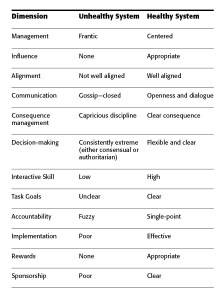
Characteristics of Healthy and Unhealthy Systems

4. Drive Cultural Change through Key Cross-Functional Projects.

A classic example of this occurred during Dr. Crosby’s support at PECO Nuclear as they changed their approach to outages. At the time the industry norm was 90 days to refuel a nuclear plant. Each plant lost somewhere in the vicinity of a million dollars a day in lost revenue. The potential payoff was obvious and huge, but the fear of decreasing the quality of workmanship was understandable and strong. Based on experience in a prior nuclear plant, Dr. Crosby was convinced the issue was organizational and behavioral, not some mythical requirement of a certain length to assure quality. Working with and coaching a hard driving leader, he helped Limerick Generating Station organize their outage cross-functionally, and instil the behaviors, including basics such as working to and adhering to a clear timeline, resulting in a more organized effort. PECO’s leadership seized the model, and set a string of record length short outages coupled with equally unprecedented problem free operating runs.

In Dr. Crosby’s model (influenced by his early years as a community organizer) change doesn’t come if the effort is limited to trainings (although training can support change). Crosby helped change the organization by implementing desired behaviors in the context of key initiatives. Outage execution, for example, is an excellent time to reinforce single point accountability, conservative decision making, conflict resolution skills, surfacing of issues, and related behaviors. The organization becomes the classroom, with each layer responsible for continuous improvement by rapidly surfacing issues (such as the possibility of missing a deadline), and by giving and receiving behavioral feedback.
Such efforts include participative large group planning processes with a cross-section of the organization including the hourly workforce. Again, Dr. Crosby’s methods build the larger team while focusing on a business critical task. His blend of community organizing and organizational development improves the quality of the output (planning that includes the people who execute the plan is almost guaranteed to be a better product), increasing ownership, immediate word-of-mouth communication, and most importantly, successful implementation. The same methods have been applied to many organizations outside the industry, in pursuit of key goals such as increased capacity, or reduced costs, with reliable results.

5. Create a “cadre” of key line people early in the process who can help facilitate the change.

Cadre played a key role at PECO Nuclear, assisting in the change process, decreasing the organization’s reliance on external resources, and continuing to develop the organization from within. These people, recruited from the hourly as well as the management ranks, were equipped with above all else high interactive skills fostered through the Conflict Management workshops and additional training. Aside from their role in facilitating change, many cadre members rose through the ranks in the organization, including the Nuclear Group President (at the time this was written).

At Peach Bottom, they were woven into every initiative, and provided the following on a formal and informal basis:

• Individual coaching regarding conflict, communication skills, etc.
• Third party conflict resolution
• Meeting design and/or facilitation
• Survey feedback and NRR facilitation

Conclusion

In short, the transformation of PECO Nuclear was no fluke. Many variables came together, including great personnel and a unique burning platform (the shutdown by the NRC). Nonetheless, the organizational development approach described above was a best practice and critical enabler, transforming the organization from a rigid and de-motivating hierarchy to an empowered culture built on a clear and thoughtful balance between management authority and employee influence. The same methods are reliable and reproducible, and continue to be implemented in nuclear and non-nuclear organizations to this day.

Partial List of Results from Crosby & Associates Interventions

Peach Bottom Atomic Power Station and PECO Nuclear following NRC shutdown (1987-2001): From worst to first by most industry standards, such as SALP and INPO ratings.

City of Spokane (1985-1986): Broke deadlock on future of Expo 74 site through facilitated citizen’s participation process.

Jamalco (1999-2010): Bottom of cash curve, 1999, top of cash curve, 2005. Reduction of $38 million in annual operating costs. Only refinery on the Island of Jamaica to maintain full production throughout the 2009-2010 Recession.

Grottoes (2005): The estimated annual savings is between $500,000 to $1 million dollars, despite turnover of both the Plant Manger and the Production Manager during the intervention.

AFP Commercial (2004): 4 1/2 % increase in mature market. 40 to 42 1/2 million increase.

CSI Alcoa Oracle Implementation: On time on budget multi-site international Go-Live.

Bohai China Expansion Project (2004): Exceeded target of reducing project costs by multi-million dollar figure.

Baden Aluminum: $5,500,000 reduction in annual operating costs.

Massena: West Smelter – nearly 3 million reduction in annual operating costs and East Smelter (both in 2001) – $6,300,000 reduction in annual operating costs.

Warrick Aluminum (2001): $4,000,000 gain for the year plus additional revenue for the plant because of the central role of the Roll Coats Unit. Intangible Results: The union made a decision to participate in cooperative work with the rest of the plant.

Sherwin Aluminum (2008-2010): Overcame deep conflict through joint Management-Labor experiential learning processes. Sherwin controlled costs and continued production throughout the 2009-2010 Recession while many similar operations went out of business.

Los Alamos: In a multi-billion dollar project for the Department of Energy, Dr. Crosby consulted with Los Alamos National Laboratories and, according to the project director, “…helped to establish a single point of accountability and to develop open lines of communication within the organization. Crosby’s techniques helped to identify and resolve many ‘stuck’ decision-making points.”

References

[1] R.P. Crosby, “Culture Change” (formerly published as “The Authentic Leader”), Crosby & Associates Publishing, 2011, Seattle.
[2] D. Goleman “Working with Emotional Intelligence,” Bantam Dell, 1998, New York.
[3] R.P. Crosby, “Solving the Cross-Work Puzzle,” LIOS Publishing, 1994, Bellevue.
[4] R.P. Crosby, “Solving the Cross-Work Puzzle,” LIOS Publishing, 1994, Bellevue.
Posted in Change Management, Culture Change, Emotional Intelligence, Leadership, Organization Development | Tagged , , , , , , , , , , , , | 1 Comment

Leadership Development – Robert P. Crosby EQ in the Workplace Workshop – June 23rd-27th 2014

“Tough Stuff” EQ in the Workplace Workshops are intensive Applied Behavioral Science trainings which combine cutting edge knowledge about leadership and human behavior with powerful personal insights and skill building. Lead Faculty Robert P. Crosby, 85 years young, developed Tough Stuff out of his experience with T-groups, beginning back in the 1950s. Don’t miss this opportunity to learn from one of the seminal forces in organizational and leadership development.

Participants will increase their emotional intelligence, including how to effectively give and receive feedback, within a framework of individual, group, and organizational theory. The primary goal of the program is to help individuals from all organizational levels and walks of life acquire the strong set of interpersonal skills, solid theoretical perspective, and deep self- awareness necessary to lead and manage effectively.

Participants learn practical skills they can use immediately at home and within their working environment:

• A core framework of individual, group, and organizational theories
• A more objective and scientific self-awareness, rooted in emotional intelligence
• Understanding how, on a life long basis, to learn more effectively from their experiences
• Conflict resolution
• Coaching and developing others
• Change management and Systems Thinking

Join us in beautiful Seattle for what many describe as a life and career changing experience! The next Tough Stuff runs June 23rd -27th, 2013. Tuition is $1250. Space is limited so contact us at c_p_crosby@yahoo.com or 206 369 9200, and sign up today!

Posted in Leadership, T-Groups | Tagged , , , | Leave a comment

Leadership and Human Systems – How Authority Relationships Influence Behavior

Image

Edwin Friedman

This is an expansion of an earlier post: A colleague in the nuclear industry recently asked my opinion of the role “boss stress” plays in nuclear safety culture. Research (study after study indicates that the boss-subordinate relationship is the biggest variable in job satisfaction, turnover, etc.), experience, and common sense all indicate that authority relationships are one of if not the biggest variables in any human system. Yet authority dynamics are poorly understood, and almost randomly executed. An excellent and practical model of the systemic impact of authority relations is the 5 behavioral characteristics of “chronically anxious systems” detailed by systems thinking pioneer Edwin Friedman. He noted the following predictable behavioral symptoms in any organization where the leaders are more a source of unnecessary stress than they are a source of calm focused effort. Each and all result in poor performance:

Reactivity – People go into fight and flight reactions such as keeping their mouth shut, talking behind people’s backs, forming and holding negative judgments and believing them to be objective, etc (read my book, Fight, Flight, Freeze!). The result is unresolved needless drama, an over-abundance of career damaging negative evaluations, and high turnover.

Herding – People over-identify with their own groups (us vs them) and are more concerned about their rights than their responsibilities. Focus is on “how can they treat me/us this way,” “they just don’t understand,” “if they were different everything would fine around here,’ and the result is poor alignment, miscommunication, and defensiveness. These behaviors, along with the next characteristic, kill the upward and lateral communication essential to safety and high performance.

Displaced Blame – People point in every other direction rather than calmly looking at their own role in what has gone wrong/what could make it better. Feedback, when it happens, tends to be negative and is likely to defensively ignored.

Quick Fix Mentality – This is an epidemic. Symptoms include trying to implement too many solutions at the same time, poor implementation, always looking for the next best thing because past efforts have failed to produce the intended results. The root cause (i.e., “quick fix mentality”) tends to be overlooked and defended as a “sense of urgency,” and the people and failed solutions tend to be blamed instead.

Absence of Non-Anxious Leadership – This is the ultimate root cause of all of the above and it replicates itself in a dysfunctional system.

Friedman’s model of non-anxious leadership was the focus of our newsletter, Human Factors issue 9.2, “The Leadership Paradox – the Shared Traits of Patton and Gandhi,” some of which bears repeating here. Both leaders embodied the second characteristic of self-differentiated leadership, as defined by Freidman, The Capacity and the Willingness of the Leader to Take Non-Reactive, Clearly Conceived, and Clearly Defined Positions.

Yes, when you take a clear stand you will almost certainly face conflict from one quarter or the other. Better men than I, such as Patton and Gandhi, certainly did. But those who try to avoid conflict by avoiding clarity, or by agreeing with everyone, are doomed to mediocrity. They cannot lead. “Followers” cannot channel their energy without clarity about where they are heading. As John Dewey put it, “There is no freedom without structure.” Calm clear direction adds essential structure to human systems.

Freidman’s “first and foremost characteristic” of a self-differentiated leader is equally vital. The Leader Must Stay in Touch. As another self-differentiated leader, General William Tecumseh Sherman, put it “no man can properly command an army from the rear.” The belief that “empowerment” and “systems” can create reliable results allowing a leader to sit in their office or attend meetings all day is a false hope. To lead one must fight the shackles of their computer and the meeting room and get out on the floor. To lead you must engage and learn. When you lose touch, you stop leading.

Many in positions of leadership struggle to meet this characteristic. Some are concerned that they will dis-empower the layers of management below them if they “skip layers.” Indeed, empowering middle management and front-line supervision is well worth your attention. But it doesn’t happen through absence. It happens through clear goals and behavioral expectations (such as expecting everyone to constantly be clarifying who will decide what, and by when, and expecting everyone to surface issues/create an open flow of communication), through hands-on reinforcement of those expectations, and by staying in touch without assuming authority that belongs at another level. It’s leaders that “take over” that dis-empower, not leaders that stay in touch.

Insist that others, at all levels, do the same. Don’t get caught in the trap of listening to different parts of the system complain about and blame others. Point them towards the others, ask if they want help, and if not, insist that they let you know about how it went.

In other words, “walk the talk.” Or as Gandhi put it, “Be the change you want to see in the world.” Clarify your expectations, and then live them through your interactions with the organization. Encourage your subordinates to do the same, including letting you know if you seem to be contradicting your own expectations. Encourage surfacing issues, even if, and especially if, they have “issues” with your positions or behavior. Learn to reinforce the behavior of speaking up without limiting yourself to either rejecting or acquiescing passively to what is said. Make sure you understand. If you manage to truly understand what people are telling you, you’ll be in the best position to decide what to do.

That brings us to Friedman’s third and final characteristic of Self-Differentiated Leadership, The Capacity to Deal with Resistance. Resistance is an element of human systems. In families, the members predictably focus their attention on the “black sheep” of the system. In organizations, and each work group, it is easy to do the same. When leaders get hooked on trying to convert or manage the most difficult members of their system, they actually reinforce the status of and tension with that member. Energy is drained from all. The likelihood of an impasse or ugly divorce is far higher than the likelihood of converting the resistance into true support. Yet most leaders get hooked like a moth to a flame.

Like Patton and Gandhi, the path forward is to walk the talk of the first two characteristics. Be clear about what you stand for, stay in touch with all parties, and move forward. This may not break the resistance, but it won’t allow resistance to bog you down.

This is not to say that the sources of resistance are “the problem.” Some people are simply inclined to be the vocal minority, brave enough to be overt in their discontent (search their comments for solvable problems, and let them help you solve them!). Others, of course, will whole heartedly follow you. The majority will probably “wait and see.” Insist that everyone surface issues and tackle barriers! Create opportunities and structure for engagement! The real problem is not resistance. The real problem is if you fuel resistance by becoming obsessed with it.

In sum, there is such a thing as good stress and bad stress. Good stress drives us to perform. Too much stress drives performance downwards. Solving problems, making improvements, delivering safely, on time, and with high quality is challenging enough. Leadership is the biggest variable in keeping the right focus, or in adding needless drama and thus fueling the 5 characteristics. As Freidman puts it, leaders are either a step up transformer of bad stress, or they act as a step down transformer, thus decreasing drama and helping the organization stay calmly and persistently focused on the task at hand.

Take clear stands, stay connected, decrease needless drama. These are the essential EQ skills we drive to a deep level in our experiential Tough Stuff learning process. Join us for the next session. Foster self-differentiated leadership throughout your system and watch performance improve exponentially.

Posted in Leadership | Tagged , , , , , , , | Leave a comment