What is Organization Development (OD) by Gilmore and Robert P. Crosby

The following are responses to a valued colleague , Joseph George Anjilvelil, of the Tata Institute of Social Science.

Joseph posted this query to our on-line OD group:

Dear Members

I write to check if you have any documents you use as a reference aid in the design of OD interventions.

Is there a book / article / compendium that point ODers to such a resource, wherein intervention types are qualified?

E.g. When to use a task or role design intervention, vis-a-vis an interpersonal intervention at the level of individuals?

What factors may one qualify a client for affinity to Open Systems modelling as in a Future Search Conference or a World Cafe? If this were not to be the qualification, what options can ODers rely on?

When does Role Negotiation make sense as bare minimum before skills ‘training’ is taken up?

Some of you may point me to Pfeiffer & Jones for facilitation design considerations or Fieldbook resources.

May I add in succession here, the question is also not about which diagnostic models to use as a qualification process. This is a post-diagnosis decision point, after data is processed for feedback to the client.

My interest is in whole systems intervention design(OD as some may synonymously consider) , where the individual, group and organisation are considered as interdependent levels. 

PS : An alumnus of the Tata Institute of Social Science saw me exiting at the narrow gate conduit and wondered if that’s also the entry to the ‘old’ campus. I acknowledged, “Yes”, and walked on. It occurred to me just 10 steps on, that what she was possibly referring to is the ‘original’ campus. 

Have I come to the ‘original OD list? Looking forward to your responses. 

Every best wish,

Joseph George A

Founder, Workplace Catalysts LLP

Adjunct Faculty, SMLS, TISS

Robert responded first:

“This is a post-diagnosis decision point, after data is processed for feedback to the client.”
Hi Joseph, I’m going to give a very simple response and not attempt to answer all that you requested.

First, responding to the above quote, I do not consider “feeding back to the client’ to be a function of OD.  Rather it is a function performed by large non-OD consulting firms who interview and then give feedback to the client. Organization development is built on action research. To do the above is a violation for me of organization development. 

I’ve excerpted from my book a summary of the strategy that my fictional but oh so real character has developed as his change strategy. As I’ve written, developing measurable goals, which is the first step was never in place with any clients when I began with them, They confused goals with actions, values,etc. 

no one I know has ridden with greater clarity a chapter 1 goals than Chris Crosby in his book strategic organizational alignment is chapter 2 is Goldman about this subject

Also, my memoirs Chronicles in chapter after the fact, how did the follows change strategy? Lol my dear friend of his during his last years, Edgar Schein, called it a “…must read for practitioners and academics”. I agree with him and am able to do so since now, at  95 years, I have laid modesty about my work aside.

If anyone wants a free electronic copy of my Memoirs, just ask me.

“APPENDIX B

  Peter’s Change Strategy

    Set goals and state them clearly.

    Help direct reports get aligned and engage with the goals and be open to feedback.

    Work closely with leaders of the union, hourly and salaried employees, to promote understanding of goals and engage about plans.

     Communicate the goals across the organization in small groups with dialogue.

     Based on the goals set forth, expect the leaders of intact or cross-functional groups to sharpen goals for their units

     Cascade a group process in each intact work group. Elements of the process must include clarity of goals, generation of issues and solutions, and follow up.

     Work with the company’s most important cross functional (matrixed) projects. 

     Develop a critical mass of strategic employees who have high interactive skills, that is, the capacity to take a stand, be decisive, stay the course against resistance, and stay connected.

     Develop a cadre of key people early in the process who will help sustain the shift in culture and the alignment around the leader’s goals.

    Peter was also well aware that he could easily turn this into a program—a new “flavor of the month”—rather than developing effective leadership therefore:

      He reviewed the “ Eleven Do’s And Don’ts For Those Who Are Serious about change (Appendix A).

      He re-read Appendix C, ”What It Takes To Pull Off A Cultural Change.”

      He committed, in a new way, to follow up. Appendix A inspired Peter. He used number 11, Be Serious About Follow Up, as a catalyst. Then he held himself and his direct reports to these standards as well as instructing them to do the same throughout the entire organization.

      He reaffirmed the need to have skilled internal or external staff doing day-by-day nurturing until his cadre was developed. They would then take over the ongoing work of sustaining change, work that is constantly needed in a productive environment: dealing with conflict as it arises, making continuous contributions to work process improvement, ensuring decision clarity and role clarity, encouraging accurate data flow, and fostering authentic interaction”

Excerpt From

Culture Change in Organizations: A Guide to Leadership and Bottom-Line Results

Robert P. Crosby

I agree with where dad started! Dad, do I get my allowance this week? Last I recall it was a quarter!

To clarify, the process of rolling out the goals layer by layer could be turned into a workteam by workteam analysis (by the workteams) of what’s in the way to achieving their part in pulling off the goals, and what they can do about it. This becomes action research the way we intend it…the work teams do their own analysis and come up with their own solutions! Not the OD person…they are facilitating the process and teaching people the process as it unfolds!  This is the Lewin training-action-research as intended! the people become the experts on solving their own problems! They are already the experts on what is really happening day by day in their part of the organization and always will be! This is developing the organization…the true intent of “organization development! Other activities can be woven in as needed, such as the application of T-groups to rapidly increasing interpersonal and group dynamic skills, and working systemic issues, such as goal and role clarity. Wah la, the entire system is engaged in a very short time, and prepared for sustainable culture of improvement. 

Regards,

Gil

And a further response from Robert:

Joseph, 

Thank you for your thoughtful response. In our large group interventions I usually did have total organization data available from our People Performance Profile which John Scherer and I developed. The data  was also broken up into discrete data reflecting the scores of each intact group (that is bosses and their employees) as well as departmental scores. We thought the top management deserved the overview, but insisted that they let the Intact Groups do the action research work of identifying key problems and key actions to take to improve productivity, etc. that was not meant to prevent top management from especially thinking of systemic issues. For instance, if role clarity scores were low across the whole organization it was probably something that one Intact group could do little about.

Always my best to you,

Bob

And Joseph’s response:

Dear Bob

I ‘hear’ you on the ‘feedback’ . As is now on the OD map that Ted Tschudy sketched on an inspirational nudge from Miriam Ritvo; Feedback is a phase. 

How one engages with the client is the crux in this Feedback phase. Holding up client data for them to own, make meaning and act on it with their own choiceful means would in my understanding qualify for Actionability even in Argyris’ terms. Their internalisation of commitment based on informed choices as he put it. Now, over the years, I’ve come to realise that this kind of commitment requires goal clarity and role clarity both. Shortfalls in either kind of clarity takes away from enthusiasm in the moment even if they sustain a belief of the future turning positive. (another topic in itself!).

Enabling the scientific mindset in the client system could be a mounting challenge, with the dilution of critical thinking amid information cascades on internet enabled media. These media polarise thought streams in the garb of convenient ideologies and effortless guile of a finger click on touchscreens. People have managed to get away with ‘we don’t have the time’ – ‘just give me a strategy’ – ‘either you know it or you don’t’ or ‘i’ll get another consultant’. 

In other words, client environments are stressed with information and their skills in discernment scant. That’s where as Cecile once mentioned offline, courses from ariane David on critical thinking help almost anyone. (another related, yet distinct topic)

That said, I’ll go over the copy of “Memoirs” that you have shared with me!

Thank You again, for writing and so sharing.

Joseph George A

Founder, Workplace Catalysts LLP

Adjunct Faculty, SMLS, TISS

Gil’s note: We want the feedback to be “a phase” not prior to but on-going and throughout the organization, as per our responses above. Analysis and feedback from the consulting team to the executives is a passive process for the organization and less likely to lead to the type of OD we practice and are advocating.
Posted in Organization Development, Robert P Crosby | Leave a comment

The Interpersonal Gap – A podcast

https://ascienceofchange.libsyn.com/the-interpersonal-gap

Posted in Emotional Intelligence, Leadership, Organization Development | Tagged , , | Leave a comment

Gilmore Crosby’s Podcasts!

Click here for my first science of change podcast!

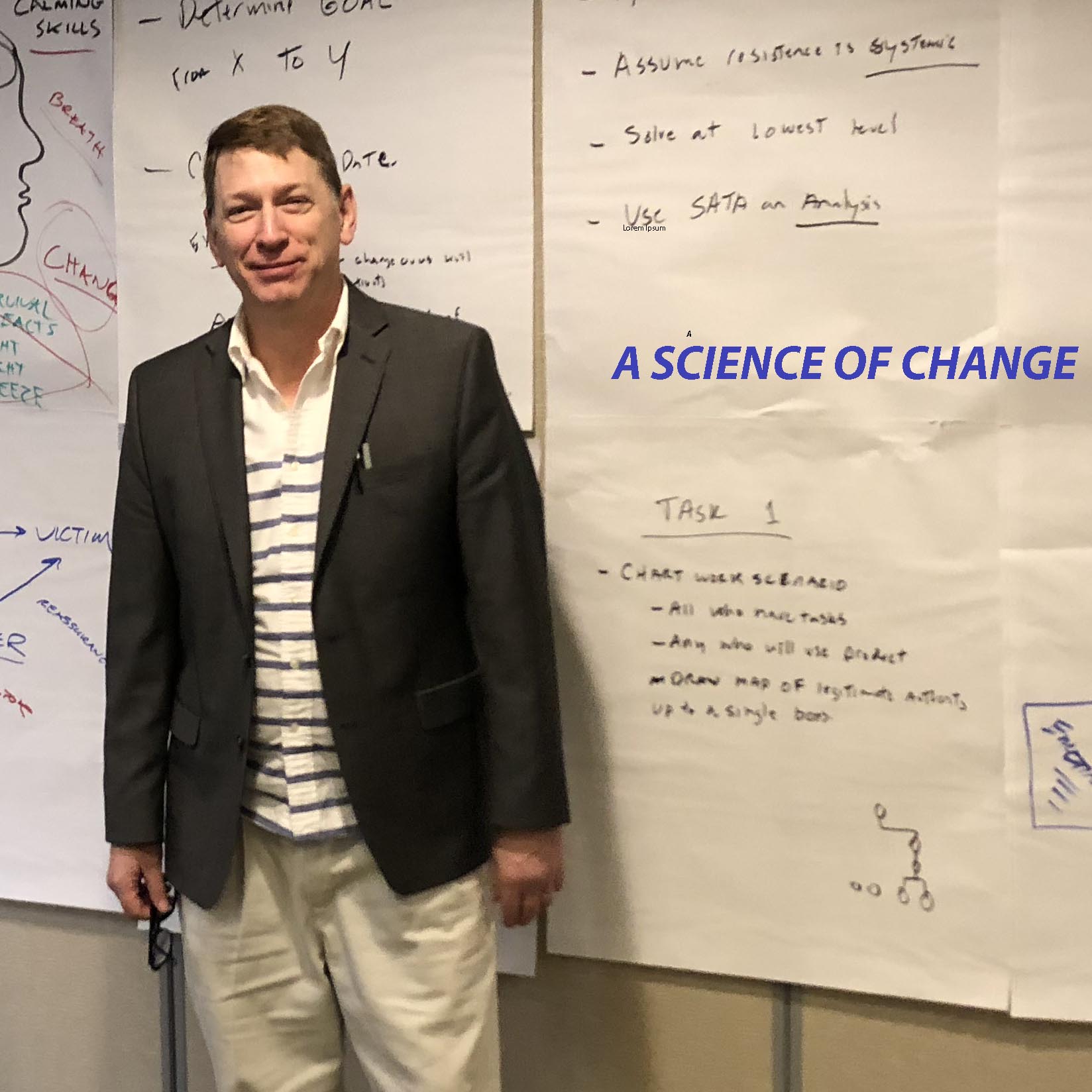
Change is an art and a science. Join me as we explore social science methods for improving your relationships at home and at work. The same theory and methods apply to situations large and small, enabling you to increase your positive influence in your personal life, your organization, and on society. I am committed to sharing these theories and methods without teasers and without hype. Thanks for listening! Go out and do good! 

Posted in Change, Democracy, Diversity, Gilmore Crosby, Lean Manufacturing, Lewin, Organization Development, Systems Thinking | Leave a comment

Micro-managing

I just wrote this on LinkedIn as a response to a post that stated, “A micro-manager is someone you pay to watch your top talent walk away.”

My response:

Allow me to charge this windmill. It’s easy, fun, and popular to label bosses as micro-managers. It’s harder but more productive to be clear about where you think you need more freedom in your job and where you think you need more guidance (yes…more leadership from above). A cookie-cutter doesn’t work (such as blaming people for “micro-managing” as if less management is the only answer). New people need more structure, experienced people less. The art of leading and following is to thoughtfully converse about the right blend of freedom and structure for each person and group. It will be ever changing and requires dialogue!

Here I add:

“Micro-manager” is a judgement, not a behavior.

Allow me to digress. Anyone who is familiar with John Wallen’s concept of Behavior Description should understand what I mean. If you are not familiar with Wallen, search this blog and/or let me know and I will send some free materials!

If you think you are being micro-managed, then there are specific tasks that you think you are being supervised too tightly on. The cure is not to silently blame and allow tension to build. the cure is to talk with your supervisor about what you want in terms of more freedom and less structure. That is the dance of leading and following necessary in all authority relationships, as Kurt Lewin’s leadership model and research shows (that can also be found by searching this blog!).

Micro-managing seems like a thing because so many accuse their bosses of it. When lots of people are saying something it seems more valid! Of course there is no doubt some varying amount of truth to it, as there is in any stereotype. And as with any stereotype, it divides people instead of bringing them together. Stereotypes are inherently victim thinking, blaming the other person or group. “It’s not me…it’s them!” “If you knew them you would know what I mean!” “Your advice might make sense with most people, but not with my boss!”

Don’t settle for blaming the boss, even if all your peers are bonding in agreement. Self-differentiate. How would you want to be treated if you were the boss? Figure out the specifics of your situation and talk to your boss about what you want. You may not get what you want, but talking about it is the only way you will ever create the possibility. You both deserve that chance!

Posted in Emotional Intelligence, Leadership, Organization Development | 1 Comment

Chapter One from my new book, Diversity Without Dogma

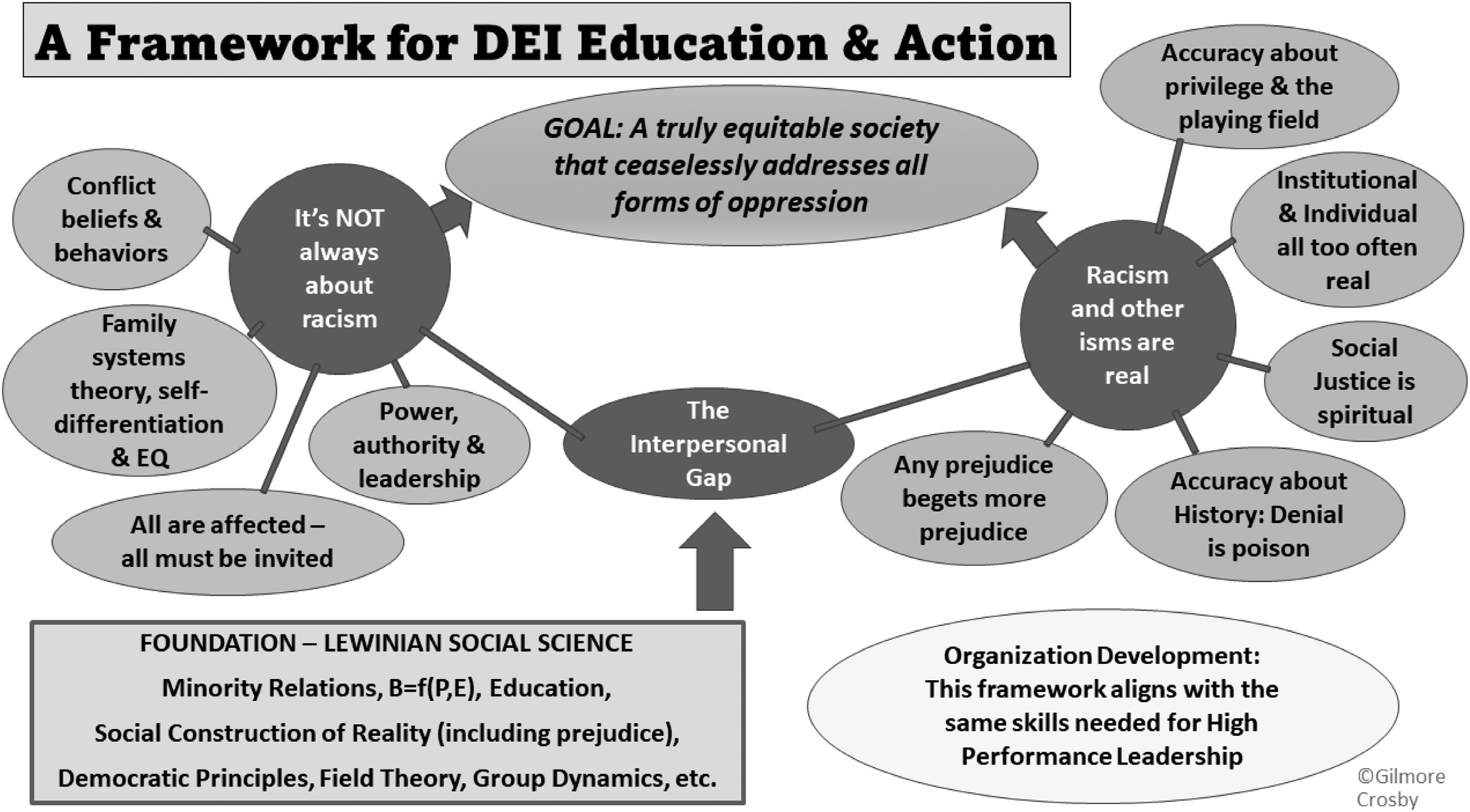
Chapter One: A Framework for DEI Education and Action

FIGURE 1.1
A framework for DEI education and action.

Here is an explanation of the framework in a nutshell:

People are teaching about diversity, equity, and inclusion without any clarity about how to approach the topic. This can easily make things worse instead of better. White people, in particular, often exit such trainings feeling blamed and less open-minded afterward instead of more. We need as inclusive an approach as possible, beginning with having a shared understanding of how to approach the topic (Figure 1.1). I don’t care if everyone uses this model, but they should try to organize their thinking in some way and make it transparent to the people they are teaching!

Having said that, let me be clear that you do have my permission to use the model or to adapt it to your needs with proper credit please. For more on adapting versus adopting, read Appendix D.

The framework begins with Kurt Lewin’s social science as the foundation. Lewin applied it successfully to addressing racism and other forms of prejudice, so we don’t need to reinvent the wheel! We can use his methods.

Next comes John Wallen’s Interpersonal Gap as a way of understanding communication, how easy it is to screw it up, and what to do to fix it. We are responsible for ourselves, whether sending or receiving!

Then, we diverge toward understanding racism in one direction and toward understanding conflict and issues that are not racism (but may occur simultaneously with racism) in the other direction.

The two branches are interdependent and must converge to move us toward the goal.

For business, the same skills that are needed to move toward the goal are essential to leadership and performance. DEI and leadership development can be one, instead of being taught separately and competing for resources as is common practice today.

For a more thorough understanding of this framework, one must start with the goal. The goal, in turn, must be understood in the light of the elements of the framework. Equity, for example, must include an objective assessment of how level the playing field is, and to the extent it is not level, action must be taken to level it. To ceaselessly address all forms of oppression, we must be as objective as possible about what oppression is, and we must not be afraid to confront it.

The goal is pursued through application. Any event now or historically could be influenced by the poison of racism, sexism, or any other form of prejudice and/or systemic/institutional oppression. Any event may simply be the result of interpersonal and other tensions that have nothing to do with prejudice or “the system.” If we don’t have an objective framework for considering both, we will create needless conflict by blaming people who are innocent, and we will obscure conditions that need to be addressed.

When leading DEI learning in organizations, one need not separate it from other organizational needs. If DEI is thought of as something you are supposed to do (“thou shalt”) but not as something related to performance, the likelihood of sustained effort and real change diminishes. Trying to convince decision makers that having more diversity will automatically improve performance is a thin argument, not backed by most studies on the topic, and so easily refuted. Using this DEI framework bridges that
gap. The framework is grounded in the same leadership, conflict, and dialogue skills needed for high individual, group, and organizational performance. There is plenty of data to back that up, starting with Kurt Lewin’s research (some of which is covered in Chapter 2) and continuing into the present day. The goals of true equity and organizational performance can be pursued simultaneously.

Next in the framework comes the foundation, the social science of Kurt Lewin. We will explore that in detail in the next chapter. By way of introduction, Lewin believed that sociological and psychological phenomena, including prejudice based on any criteria (such as race or gender), must be understood and addressed in a scientific manner. He devised and tested a scientific approach that worked both in his experiments and in the efforts of others. By experiments, I mean he used his methods in real-world situations, in industry, and in society. He also applied them at the level of the individual, the group, and as we shall see, the same methods almost certainly influenced the reconstruction of Germany and Japan.

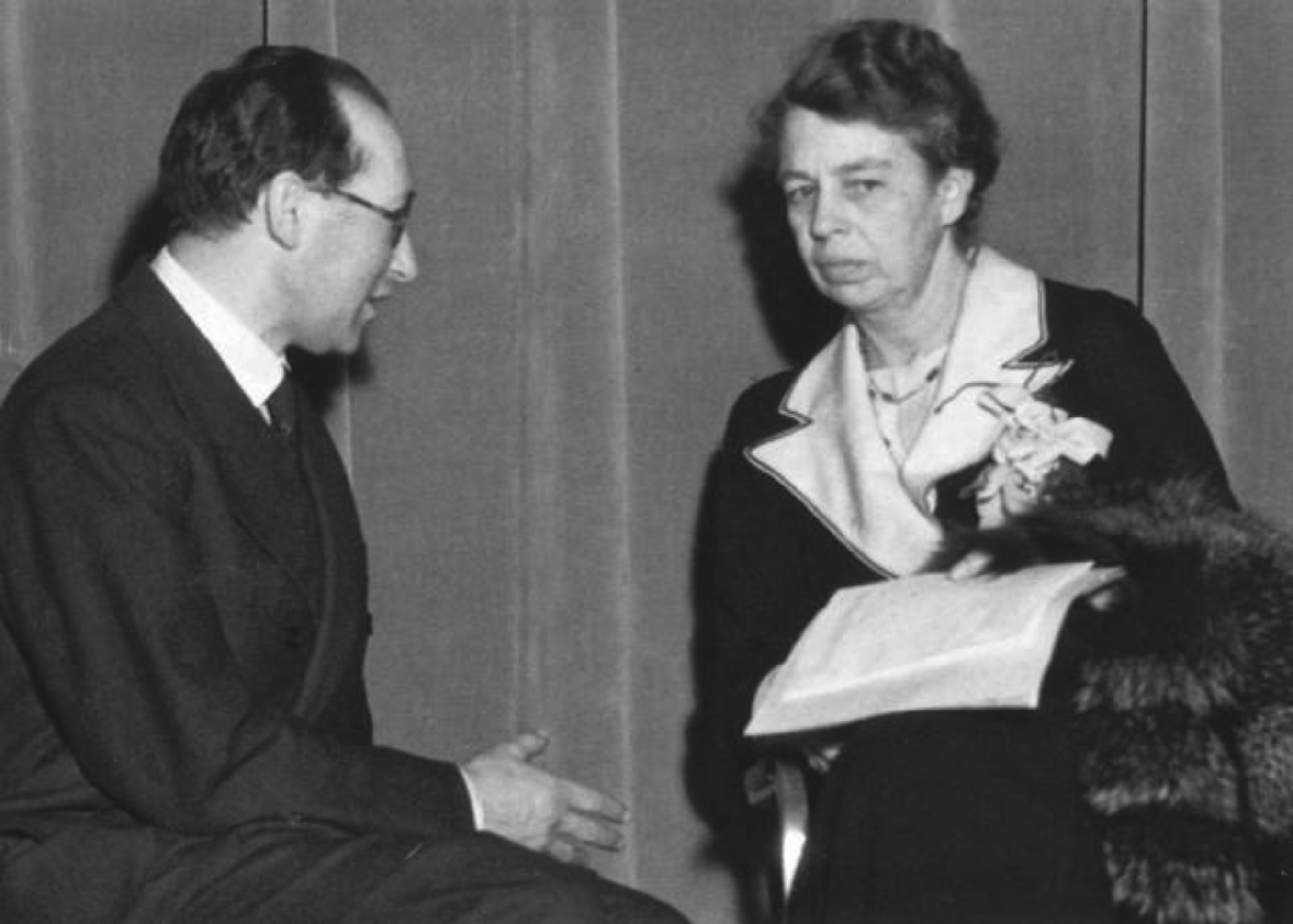
IMAGE 1.1
Kurt Lewin and Elanor Roosevelt, Copyright ©️ Michael Papanek. (Used with permission.)

Lewin believed an effective social science should be applicable to all situations, be they small or large. If a person is interacting with someone who is different from themselves in some generally obvious way, such as gender, and there arises tension in the interaction, a solid DEI framework should help the people involved understand what is happening. It is possible the tension has nothing to do with gender, and so, the intrapersonal (within the individual) and interpersonal (between the individuals) must be considered. It’s possible the tension is about gender at an interpersonal and intrapersonal level but is not related to anything else. An example would be that one or both parties hold stereotypes of how gender should behave that the other party does not hold or unresolved anger toward a parent. It could also be that larger institutional dynamics are at play, such as a belief, supported by others, that certain jobs and skills are only suited to one gender. That would almost certainly be an example of institutional sexism. There could also be larger dynamics at play that result in tension between individuals and groups that have nothing to do with institutional isms, such as goal misalignment between groups (maintenance and production, for example, or a location and a corporate headquarters) or different roles in the organization (such as management and labor). To further complicate the possible root cause of the tension, other types of prejudice could be at play (racism, etc.). Figure 1.2 illustrates these different levels and dynamics.

FIGURE 1.2
Inequality conflict grid.

It would be nice if it was simpler, but as Lewin’s social science demonstrates, as long as there is inequality, there will be increased ambiguity. That’s why it is easy to blame the innocent and to hide the guilty, and that is why we will all be a little crazy until true equality is achieved. Assuming it is one thing or another is tricky business, and error-likely. Seeing through this fog as accurately as possible requires social science clarity and is explored from various angles in this framework but especially by
applying a model known as The Interpersonal Gap in Chapter 3. If we take the shortcut of dogma (all white people are racist, for example), we head down the slippery slope of fighting prejudice with prejudice, leading to predictable and understandable polarization.

This framework instead asserts that any prejudice begets more of the same and is more harmful than helpful to the overall goal. Furthermore, any such divisive approach works against the framework standard of All are affected – All must be invited. In other words, everything in this framework is linked together and is important to pursuing the goal.

Sections II and III explore each element of the framework in detail, while Section IV moves on to application and action. That’s what we need, so let us begin!

Available now on Amazon and other major booksellers!

Posted in Change, Democracy, Diversity, Emotional Intelligence, Lewin, Racism, T-Groups | Tagged , | Leave a comment

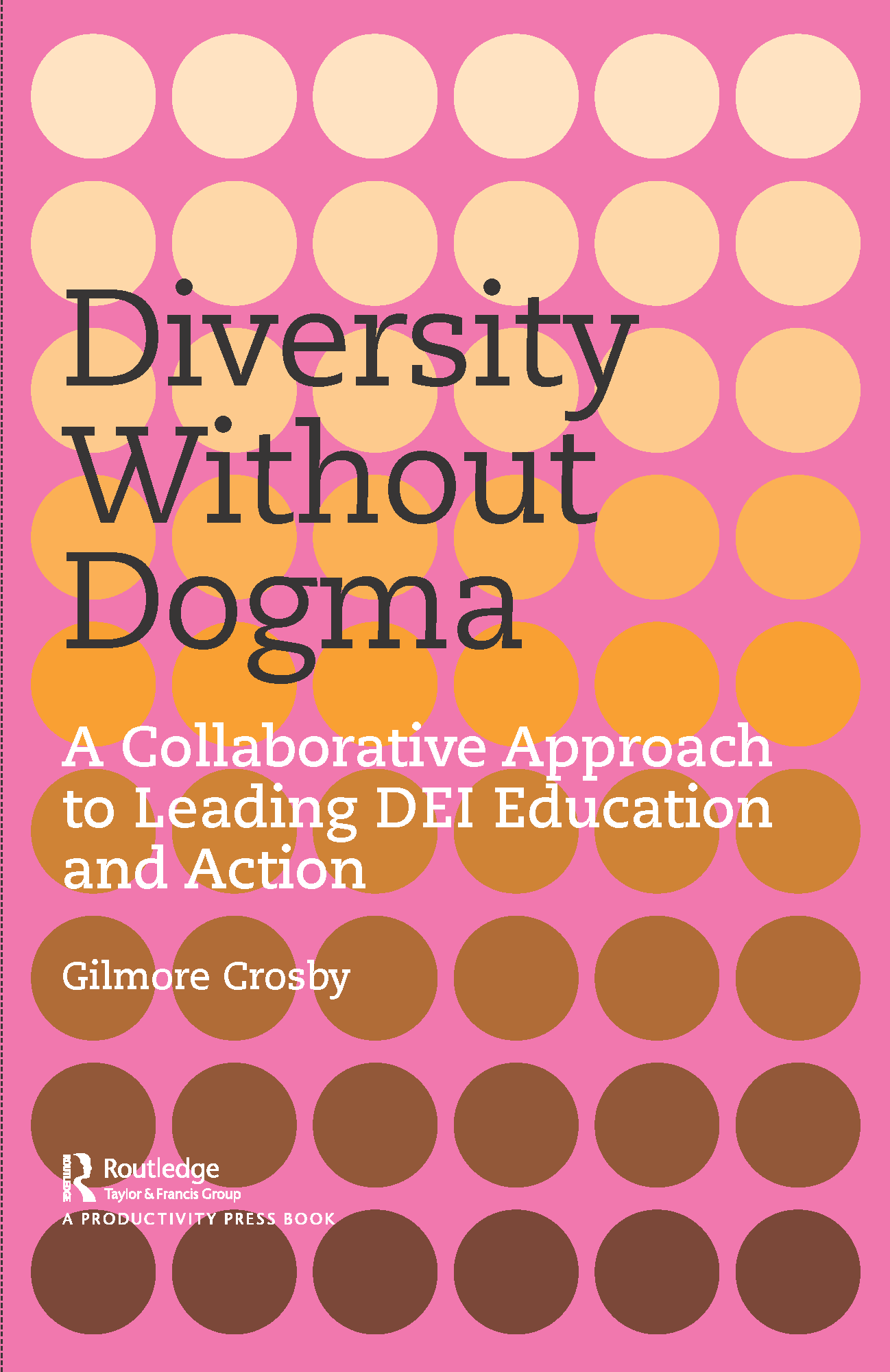
Cover blurb for my new book, Diversity Without Dogma!

Social Scientist Kurt Lewin said, “No research without action, and no action without

research.” Too much of the current DEI (diversity, equity, and inclusion) approach is

insight-based instead of action-based. Even though institutional racism is identified as

the root problem, the change effort is focused on looking inward for bias instead

of taking action to eliminate institutional racism and other isms. A Lewinian approach, in

contrast, is balanced. What people think is important, but no more important than what

people do. If you bring people together to change things, this will change what

people think! We don’t need therapy nearly as much as we need action based on dialogue!

Instead of spending your energy soul-searching for evidence in your thoughts and

behaviors that you have unconscious biases, this book helps put your energy into doing

something practical about racism.

To get there, this book uses Lewin’s social science to build a framework for sorting through

the many approaches to and positions held on race, racism, diversity, and related topics.

While the framework is and must be applicable to any prejudice, systemic or individual,

the bulk of this exploration is focused on racism, which to a large degree has become the

primary social justice focus of our times. Painfully aware that conversations about race can

easily deteriorate into polarization, the author lays a path toward finding common ground.

Due out December 2022!

Posted in Diversity, Lewin, Racism | Leave a comment

Democracy, OD, and Ukraine

The President of Finland told Putin to “Look in the mirror.” We in the US should do the same. Please grant me your time and attention as I make the case for, and the connection between, democratic values in leadership, in organizations, and in our national politics. As Putin continues his brutal war on Ukraine[1] it’s the right time to reflect on our own democracy and the democratic roots of OD. OD emerged from multiple sources, but the biggest influence was Kurt Lewin’s social science, itself forged by Lewin’s expereince as a Jew in Germany during the rise of Hitler, and further tested by his expereince in his eventual home, the United States. Far from welcoming, the US government erected a series of hoops for Lewin to navigate through, despite fleeing obvious persecution and holding a PhD. He was unable to secure safe passage for his mother, who died in a Nazi concentration camp.

Lewin, like his contemporary John Dewey (and Aristotle long before them) believed that “Autocracy is imposed on the individual. Democracy he has to learn (Lewin, 1939[2], 1997, p66).”  We must each “…learn to play a role which implies, among other points, a fair share of responsibility toward the group and a sensitivity to other people’s feelings (Lewin, 1944, 1999, p289).” “Learning democracy means, first, that the person has to do something himself instead of being passively moved by forces imposed on him (Lewin, 1942, 1997, p223).” Lewin continues (in this small sample of his writing on the subject), “It is a fallacy to assume that individuals, if left alone, will form themselves naturally into democratic groups—it is much more likely that chaos or a primitive pattern of organization through autocratic dominance will result. Establishing democracy in a group implies an active education…What holds for the education of democratic followers holds true also for the education of democratic leaders. In fact, it seems to be the same process through which persons learn to play either of these roles, and it seems that both roles have to be learned if either one is to be played well (Lewin, 1944, 1999, p289).”

Where can this learning take place? In the family, in the workplace, but most importantly, in the schools. “…for educating future citizens, no talk about democratic ideals can substitute for a democratic atmosphere in the school. The character and the cultural habits of the growing citizen are not so much determined by what he says as by what he lives.” Citizens must learn to think for themselves, not simply follow rules and memorize answers, to become effective members of a democracy. We teach the most important lessons to the next generation by what we do, not by what we say. We fall far short of that standard in the United States, and we reap what we sow.

OD professionals and organizational leaders take heed. Lewin convincingly established that the same skills of leadership and followership essential to democracy also lead to high performance and morale in organizations. Are you encouraging active participation in the organization, or passivity? Are you supporting effective leadership and followership? Leaders must know how to be in charge and allow as much influence as possible from their followers. There must be freedom AND structure. Attempts to create “leaderless” organizations come from anti-authority immaturity and ironically are often imposed in an authoritarian manner (“You will run this manufacturing organization without supervisors”). As Lewin saw with clear eyes, “Few aspects are as much befogged in the minds of many as the problems of leadership and of power…power itself is an essential aspect of any and every group…(Marrow, 1969, p. 172).” In organizations and in society we need effective democratic minded leaders and followers. We won’t create that by eliminating leadership. We need to develop leaders and followers who can reason together: “To believe in reason is to believe in democracy, because it grants to the reasoning partners a status of equality. It is therefore not an accident that not until the rise of democracy at the time of the American and French Revolutions was the ‘goddess’ of reason enthroned in modern society. And again, it is not an accident that the very first act of modern Fascism in every country has been officially and vigorously to dethrone this goddess and instead to make emotions and obedience the all-ruling principles in education and life from kindergarten to death (Lewin, 1937, 1997, p67).”

One need look no further than the current war to see the systemic effects of totalitarianism versus democracy. Morale and initiative amongst the Russians is apathetic, while moral and initiative amongst the Ukrainians is passionate.

Democratic values are vital to the health of organizations and nations. Early OD and robust democracy are both built on dialogue and appreciation of each person, each role, and respect for independent (often critical and divergent) thinking. Passivity and compliance, convenient in the short run, fosters dependence in the long run.

Lewin witnessed and wrote about the post WWI collapse of democracy in Germany. The rights made possible by democracy were used by those intent to undermine it. In a nation where many citizens craved “strong” leadership, economic chaos (including inflation) and other sources of fear were easily preyed on. Scapegoating, antithetical to true democracy (and to organizations, and to OD), rose to new and horrific levels.

Lewin was clear that racism, sexism, and all forms of prejudice are indelibly anti-democratic. Any who carelessly attack reason, free speech and a free press, immigrants, ethnic groups, women, and minorities of any kind, to further their own political ambitions, are gnawing away at the fabric of democracy.

Within the OD profession careless attacks on the beginning of OD likewise gnaw away at the roots, weakening the one profession that has the science of democracy at its core.

The struggle for democracy and against authoritarianism will likely never be done. We must do what we can to protect and strengthen democracy here in the US (an effort that need not be separate from how we apply OD) and to support democracy abroad. Long live democracy! Long live OD! Long live Ukraine!

Lewin, K. (1997). Resolving Social Conflicts & Field Theory in Social Science. Washington DC. American Psychological Association.

Lewin, K. (1999). The Complete Social Scientist. Washington DC. American Psychological Association.

Marrow, A., (1969). The Practical Theorist: The Life and Work of Kurt Lewin. New York, NY. Teacher’s College Press.


[1] It’s the least we can do out of respect for my Ukrainian colleagues who are literally preoccupied with seeking weapons right now instead of spreading knowledge.

[2] I have added the year that Lewin’s articles were originally printed, along with the year of the publication listed in the bibliography from which I am quoting.

Posted in Democracy, Gilmore Crosby, Lewin, Organization Development | Tagged , , | 2 Comments

A Personal Declaration of Independence from Racism, Sexism and Greed

1. I do not identify with the power structure in the US built upon skin color and gender. I do not deny it has and does exist, and that I have and do receive direct and indirect privileges from it even though I find it repulsive.

2. I refuse to be known by the socially constructed classifications of race used by that power structure even though I am superficially known that way by most of my fellow humans. Categories like “white” and “people of color” are not accurate, and I refuse to accept them.

3. I do accept being known by my biological gender even though I am deeply troubled by the sexism now and throughout history by my fellow males, and I fully support any who do not want to be known by classifications of gender, or any other classifications.

4. I know myself as a living being that is one with all of existence, connected to all past generations and answerable to all future ones. I see in myself all my ancestors from the countless places, cultures, circumstances, and shades of skin from which I came. I hold as a sacred trust the future generations that depend on our actions today. That’s my real identity as I know it, and I’m not willing to settle for less.

5. I declare my opposition to all prejudice, now and throughout history, both personal and systemic, and I will fight to my last breath to eradicate the cancer of prejudice from myself and from human society.

6. While acknowledging and confronting historic and current systemic racism and sexism, I do not accept that one’s position in the system frees one from responsibility in personal interactions. I hold that we are all poisoned by inequality, whether we are in a relative position of power or the lack of it and that the illogical thinking that is prejudice breeds more of the same while also causing confusion, self-doubt, blame, and defensiveness. Rather than further separating us by prescribing different behaviors from the oppressors and the oppressed, I endeavor to treat all adults as adults and thus I will not collude with excuses for individual or group behavior, especially the holding of prejudices and stereotypes, regardless of one’s position in any system of oppression.

7. I am deeply troubled by the history of greed, violence, and waste that intersects with racism, sexism, and other forms of oppression. I believe that prosperity can be shared, and I will work towards a more equitable, non-violent, and sustainable world.

8. I am deeply troubled by the ugly side of the history of the human race, and yet I love us deeply and will strive ceaselessly to bring forth our better angels so a day can come when future generations live in harmony, free from the social diseases of greed, racism, and sexism.

9. I recognize that the human race may yet destroy itself. I am against any and all excuses for doing so locally and globally.

10. I am deeply troubled by the ugly side of the history of my own nation and yet I also love it deeply and vow to work tirelessly towards our higher ideals such as democracy, religious freedom, freedom from tyranny, and the right of all to life, liberty, and the pursuit of happiness.

This is my Declaration of Independence, my plea for collective action, my Declaration of Interdependence, and my vow to stand for a better world.

Gilmore Crosby

Posted in Diversity, Racism | Tagged , | Leave a comment

Keys to Success (in Citizen Involvement)

A new article by our founder on his application of OD to citizen involvement in government!

https://www.spokesman.com/…/2021/aug/03/keys-to-success/

Posted in Change, Change Management, Citizen Involvement, Community Organizing, Organization Development, Robert P Crosby | Tagged , , , | 1 Comment

Democracy in politics and in the workplace

The following is in response to an on-line discussion between several colleagues which started with a post about the possible decline of democracy in the US, and went on to ponder whether that was caused by capitalism:

I do think that the strength of US democracy should not be taken for granted, but I don’t view capitalism as the threat. We have been democratic and capitalist for a long time. Granted, capitalism and democracy are two different things, and they don’t automatically support each other. A strength of capitalism is that you can profit, and that possibility is available to…I won’t say anybody…but to many. A weakness is that if you don’t, you and all the people that depend on you are screwed. Unfortunately for the system, that seems to be unavoidably cyclical. It is also unfortunate that it is easy to get seduced by quick ROI increases through short-term maneuvers such as cutting people and expenses (such as maintenance and R&D). It also appears to be true that without government intervention, wealth and the ability to profit consolidates into fewer and fewer hands, hands with a disproportionate ability to influence the government. With that in mind I personally favor a capitalist economy with a government that has strong checks and balances to detach itself from the influence of money (a need which the founders didn’t pay much attention to, and which the US currently lacks), and a government which redistributes a high percentage from the wealthiest to the rest of society, much as the tax structure did in the US in the 1950s (when we built much of the infrastructures that we rely on today).

While much more could be added to my simplistic analysis, it is certainly a cold hard fact that organizations functioning within a capitalist economy have to meet the requirements of that environment.  

Going back to the comment on the possible decline of democracy in the US and elsewhere, Kurt Lewin was clear that democracy must be learned and renewed with every generation, and that it is easier to adapt to totalitarianism than to being a citizen in a democracy. We need look no further than Lewin for lessons on failures of democracy. He wrote several articles pondering the failure of democracy in post WWI Germany. While there were many variables, one that stands out was the misguided belief that freedom of speech must be extended to all, even those who would spread hate and rule autocratically if they were in power. The initial German experiment with democracy was too weak to stand up to the rise of Nazism. Germany “tolerated the intolerant.”

We have done that for far too long here in the US imho by tolerating white supremist groups for example. Democracy in Lewin’s mind must be strong. The representative government must act, as FDR did during WWII, and as Lincoln did when he arrested the Maryland state assembly rather than allowing them to secede from the union. That was decisive action by a democratic leader, and the lack of the same would have led to disaster.

That doesn’t mean that every action will work the away it was intended. Some will have negative consequences. The same is true of inaction. democratic leadership is not for the faint of heart because the free press and the armchair quarterbacks, myself included, will voice our opinion of every decision.

Applying Lewin’s democratic principles of leadership to organizations, I am not so quick as some of my colleagues to label most US corporations as essentially “totalitarian.” relentlessly pursuing ROI is a challenge which must be pursued for an organization to exist within a capitalist environment, but it does not have to be done without a soul. In Lewin’s model (which works for me) the democratic leader is in charge, and then allows as much freedom and influence as possible. This combination of leadership and freedom consistently results in high productivity and morale, even within a capitalist environment. As his research further showed, many mistake “hands off” leadership, or laisse-faire, as democratic. Such passive leadership, even if the leader is “nice,” consistently leads to confusion, infighting, and low productivity. A democratic leader can allow a high functioning team to operate without supervision. A laisse-faire leader will try that with every team and create chaos. The OD industry imho too often doesn’t make these distinctions, instead favoring the flat self-organizing laisse-faire model as somehow morally superior.

Turning back to politics, we’ve been laisse-faire in the US about racism, militias, police violence, poverty, etc., for too long, much as in post WWI Germany, allowing a small vigorous minority to poison our political a social discourse. I for one say “enough!”

Posted in Gilmore Crosby, Leadership, Lewin, Organization Development, Racism, Systems Thinking | Leave a comment